
Branson Wind Damage Roof Repair Done Right
It Doesn't Take a Tornado to Peel Your Roof.
One good Ozarks gust can lift, crease, or flat-out peel the shingles right off your roof. Big Chief Roofing does honest Branson wind damage roof repair, fastening down what's loose, replacing what's gone, and finding the hidden damage before the next storm makes it worse. No gimmicks, just a fair fix that holds.




Wind Doesn't Need a Tornado to Wreck Your Roof
Here's how wind really works on a roof. It finds an edge, gets underneath, and pries. Sometimes it rips shingles clean off, which is easy to spot. But a lot of the time it just lifts them and breaks the adhesive seal that holds each shingle down, or it creases them so they're weakened but still sitting there. From the ground, that roof looks totally fine. The problem is the seal is broken now, so the next rain sneaks underneath and the next gust peels a little more. Once wind finds a weak spot, it unzips a roof one shingle at a time.
The edges, corners, and ridge of your roof catch the most wind, so that's usually where the trouble starts. Most folks only look for missing shingles, so they figure everything's okay when the roof is actually compromised. And after a big windstorm, the out-of-town chasers come knocking too. What you really want is honest Branson wind damage roof repair from a local crew that climbs up, finds the lifted and creased shingles you'd never see from your yard, and fastens it all back down so it holds.
“Before Vela, approvals felt vague. Now there’s a clear moment when everything is agreed on, and I can move forward with confidence.”

Maria L.
Travel Advisor
“I got in touch with Tyler at Big Chief Roofing after getting my inspection notice back on my home that was under contract. He was quick to respond, got the necessary repairs done on time, and was extremely reasonable compared to other roofing contractors. If you're looking for someone who is trustworthy and is quick about making things happen… here’s your guy!”
Cameron McConnell
Branson, Missouri
Tyler Here. Let's Nail This Down.
I'm Tyler Arnold, and my family runs Big Chief Roofing right here in Branson. The wind around here is relentless, and I've seen too many roofs where someone slapped in the obvious missing shingles, ignored the loose ones right next to them, and watched the whole thing fail again a month later. That's not a repair, that's a rerun. We do it right the first time, so you're not calling somebody back after the next storm rolls through.
When you call us for Branson wind damage roof repair, we do a full wind inspection, checking for lifted shingles, creased shingles, popped nails, and damage along the ridge and edges where wind hits hardest. We reseal and refasten what can be saved, replace what's gone with shingles that match, and document everything for insurance if there's a claim. It gets done so it holds through the next Ozarks blow. We show up when we say, and we clean up every nail. Consider it handled.
Tyler Arnold
Guarantees Built to Hold
Money-Back Install Guarantee
If a problem occurs because of our installation, we'll come back and fix it ASAP. No prorating. No trip charges. No finger-pointing. If we can't fix the issue for some reason, we will refund your entire purchase. EVERY. SINGLE. CENT. Every wind repair we make is backed by this promise, full stop.
Price-Match Guarantee
If you find another licensed and insured roofing company that offers the same level of products, warranties, and service as we do, we'll match their price plus give you $250 in cash for finding a competitor we didn't know about. Find the same fix for less nearby and we'll beat it, then hand you $250.
No Nail Left Behind Guarantee
After our final inspection and cleanup, if you find any nails we missed, you get $1 per nail back. Blown-off shingles and stray nails all get cleared from your yard before we go.
“Before Vela, approvals felt vague. Now there’s a clear moment when everything is agreed on, and I can move forward with confidence.”
Maria L.
Travel Advisor
Maranda Carter
Branson, Missouri
“This local company did things right! My new roof and gutters are perfect! Tyler went above and beyond with help on the insurance claim, explaining everything, and was here from start to finish! I would definitely recommend Big Chief Roofing to anyone!”
Neighbors Whose Roofs Held Through the Next One
We could talk about doing it right all day, but the folks whose roofs made it through the next storm say it a whole lot better. Here's what real Branson homeowners think after we handled the job.
Wind Repair Is One of Many Things We Do
Branson wind damage roof repair keeps us busy every storm season, but we handle the whole list below too. Here it is as a carousel you can swipe through.
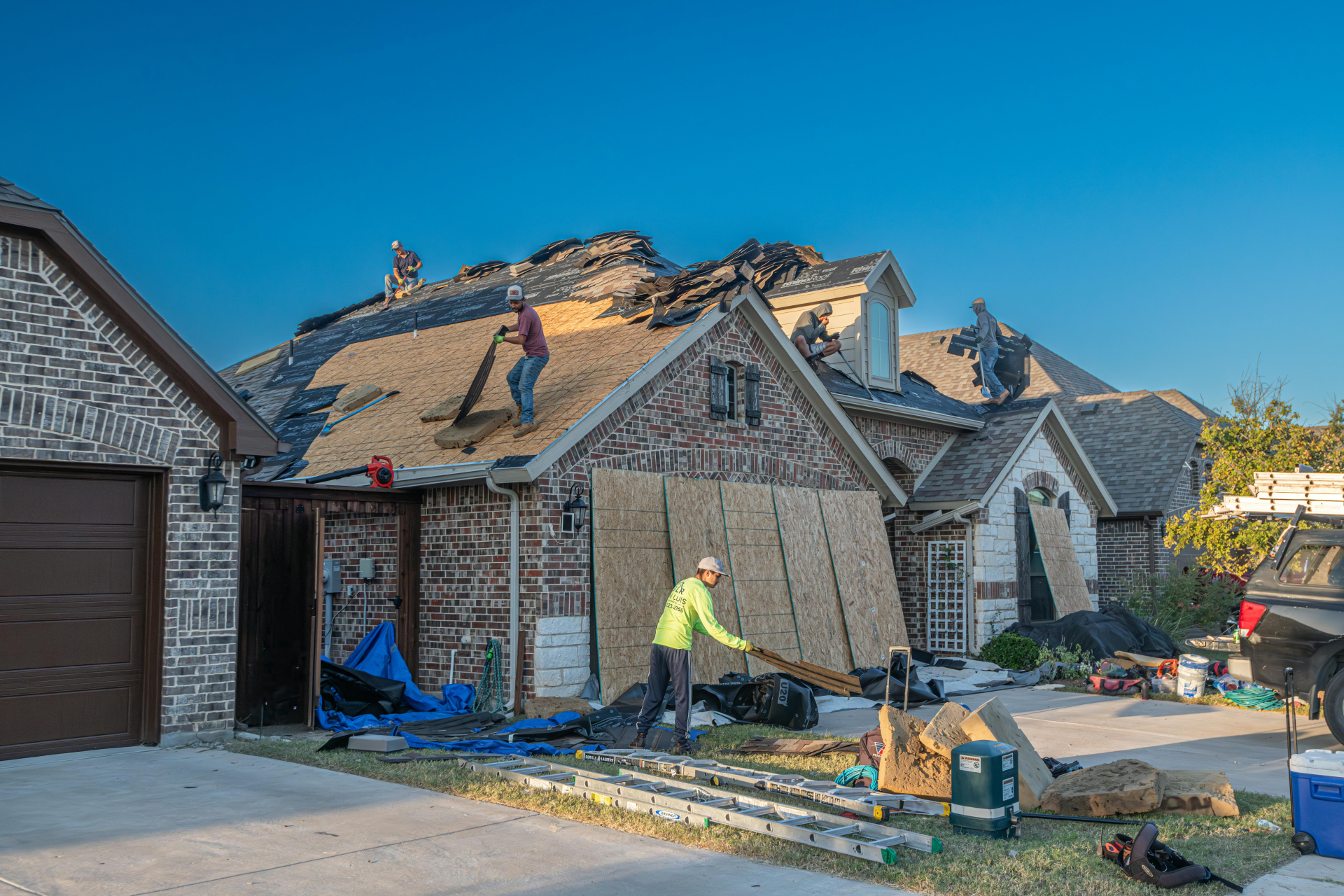
Roof Replacement
Wind took too much? Our Branson roof replacement gets you a whole new roof, mess handled.
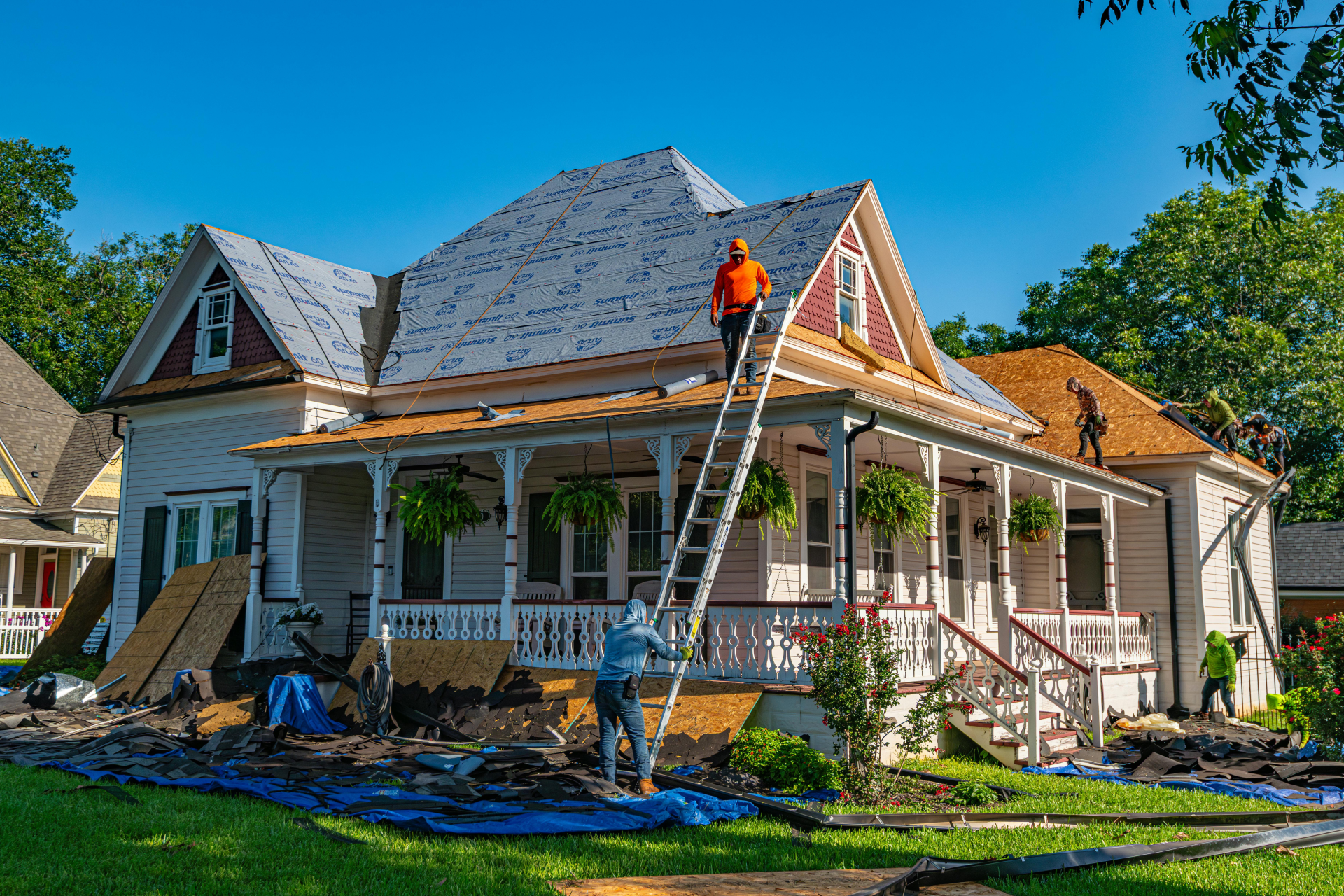
Roof Installation
Building new? Our Branson roof installation sets your roof down solid from the deck up.
Roof Inspection
Not sure what the wind did? Our free Branson roof inspection gives you the honest read.
Roof Leak Repair
Water finding its way in? Our Branson roof leak repair tracks the source and seals it.
Storm Damage Roof Repair
Whole storm did damage? Our Branson storm damage roof repair sets it right, honest and quick.
Asphalt Shingle Roofing
Ready for new shingles? Our Branson asphalt shingle roofing uses tough TAMKO shingles that grip and last.
Metal Roofing
Want a wind-tough roof? Our Branson metal roofing locks down and shrugs off decades of weather.
Brava Roofing
Love the slate or cedar look? Our Branson Brava roofing gives it in tough, secure composite tiles.
Roof Rejuvenation
Shingles getting brittle? Our Branson roof rejuvenation restores them and adds years for less.
Gutter Installation
Wind rip your gutters loose? Our Branson gutter installation hangs fresh seamless gutters.
Gutter Guard Installation
Tired of clogged gutters? Our Branson gutter guard installation keeps the junk out.
Roof Replacement
Wind took too much? Our Branson roof replacement gets you a whole new roof, mess handled.
“Very open and honest. Encouraged me to get other bids as well. They were not only the best-priced but also the most organized and open about our plans and options to take. The workers were clean and quick and did everything they could to protect the property. Tyler even came out himself to magnet the driveway so we wouldn’t drive over nails each night bc I have an EV that charges in the garage. Excellent experience! Big Chief definitely goes above and beyond.”
Gwen Pead
Branson, Missouri
See the Roofs We Buttoned Back Down
Talk is cheap, so here's the proof up on the rooftops. This live map shows our recent Branson wind damage roof repair jobs and other projects around the area, snapped straight from the job site. Real homes, real shingles refastened, real roofs ready for the next blow.
Where We Do Branson Wind Damage Roof Repair
We're Ozarks folks born and raised, and we cover a big stretch of it. Wind rough on your area? We'll bring the crew to you. Tap your county below to see if we're working nearby.
Taney County
Learn MoreWhere we hang our hats. With the shop in Branson, we handle wind damage all over Taney County, from Hollister and Forsyth to Merriam Woods, Rockaway Beach, Taneyville, and Kirbyville. Close by means we get up there fast to fasten things back down.
Stone County
Learn MoreThe open water at Table Rock lets the wind really get going. We repair in Kimberling City, Lampe, Crane, Reeds Spring, and Cape Fair, plus Galena, Branson West, Blue Eye, and Indian Point. Lake house or year-round home, we'll make it hold.
Barry County
Learn MoreThe drive southwest is no trouble. We handle wind damage in Monett and Cassville, out at Shell Knob, and over in Purdy. Loose shingles found and fastened back down right.
Christian County
Learn MoreWe handle wind damage all over Christian County, from Nixa and Ozark to Clever, Sparta, and Highlandville, plus Billings, Fremont Hills, Saddlebrooke, and Spokane. Newer subdivision or older home, we catch what the wind loosened.
Lawrence County
Learn MoreWe roll out west for wind damage in Aurora and Mount Vernon and on through Pierce City, Marionville, and Verona. Wide-open farm country catches a lot of wind, and we'll set it right.
Greene County
Learn MoreWe handle wind damage all over Springfield and the towns around it, including Republic, Willard, Battlefield, Strafford, Fair Grove, Ash Grove, and Walnut Grove. Big city or small town, we fix it so it holds.
Webster County
Learn MoreWe take care of the eastern folks too, handling wind damage in Marshfield, Rogersville, Seymour, and Elkland. High, open country gets hit hard by wind, so a real inspection pays off up here.

Tracy Whitaker
Branson, Missouri
“Great experience with Tyler and his team at Big Chief Roofing at every level. Super helpful with our insurance and the roof looks awesome. This is a company you can trust. Thank you Tyler!”
Branson Wind Damage Roof Repair Questions, Answered Honest
How do I know if wind damaged my roof?
The obvious sign is missing shingles or pieces of shingle in your yard. But wind damage is often subtler than that, lifted shingles, creased ones, or exposed nails you'd never spot from the ground. If you've been through a strong windstorm, a Branson wind damage roof repair inspection is the only sure way to know what really happened up there.
My shingles look fine but a few are lifted. Is that a problem?
Yes, more than folks realize. A lifted shingle usually means the adhesive seal that holds it down is broken. Even if it settles back into place, it's no longer sealed, so water can get under it and the next gust can peel it right up. Those loose shingles are exactly the ones we resecure.
What does wind actually do to a roof?
Wind lifts shingles and breaks their seal, creases them so they weaken, tears them off entirely, loosens nails, and beats up the ridge cap along the peak. It tends to hit the edges, corners, and ridge hardest, since that's where it can get underneath and pry.
How much wind does it take to damage a roof?
Less than most people think. Strong gusts in the 45 to 60 mile-per-hour range can lift and loosen shingles, and an older or already-worn roof can be damaged by even less. You don't need a tornado or a named storm, just a rough Ozarks thunderstorm will do it.
Does wind damage need to be fixed right away?
Sooner is better. Wind damage doesn't fix itself, and every broken seal is an opening for the next rain and the next gust to make things worse. Getting it handled quickly also matters for insurance, since many policies have deadlines to file a wind claim.
Will insurance cover wind damage?
Usually, yes. Wind is one of the most common covered roof claims. We photograph and document the damage during our inspection so you've got solid proof, and we help you handle the claim honestly. We'll never talk you into filing for damage that isn't really there.
Can't you just replace the shingles that blew off?
We could, but that's often only half the job. The shingles that blew off are obvious, but the lifted and creased ones around them are the ones that'll fail next. We check the whole roof, resecure what's loose, and match new shingles as closely as we can, so the repair actually lasts.
Do you guarantee your wind repair work?
Absolutely. Every wind repair and replacement we do is backed by our money-back workmanship guarantee. If our work ever fails you, we come back and fix it or refund every cent. Done right and stood behind.