
Tell Us About Your Building. We'll Walk You Through the Flat Roofing Options.
We will get back to you as soon as possible.
Please try again later.
Flat Roofing in Branson
Flat Roofs Leak Because They're Installed Wrong.
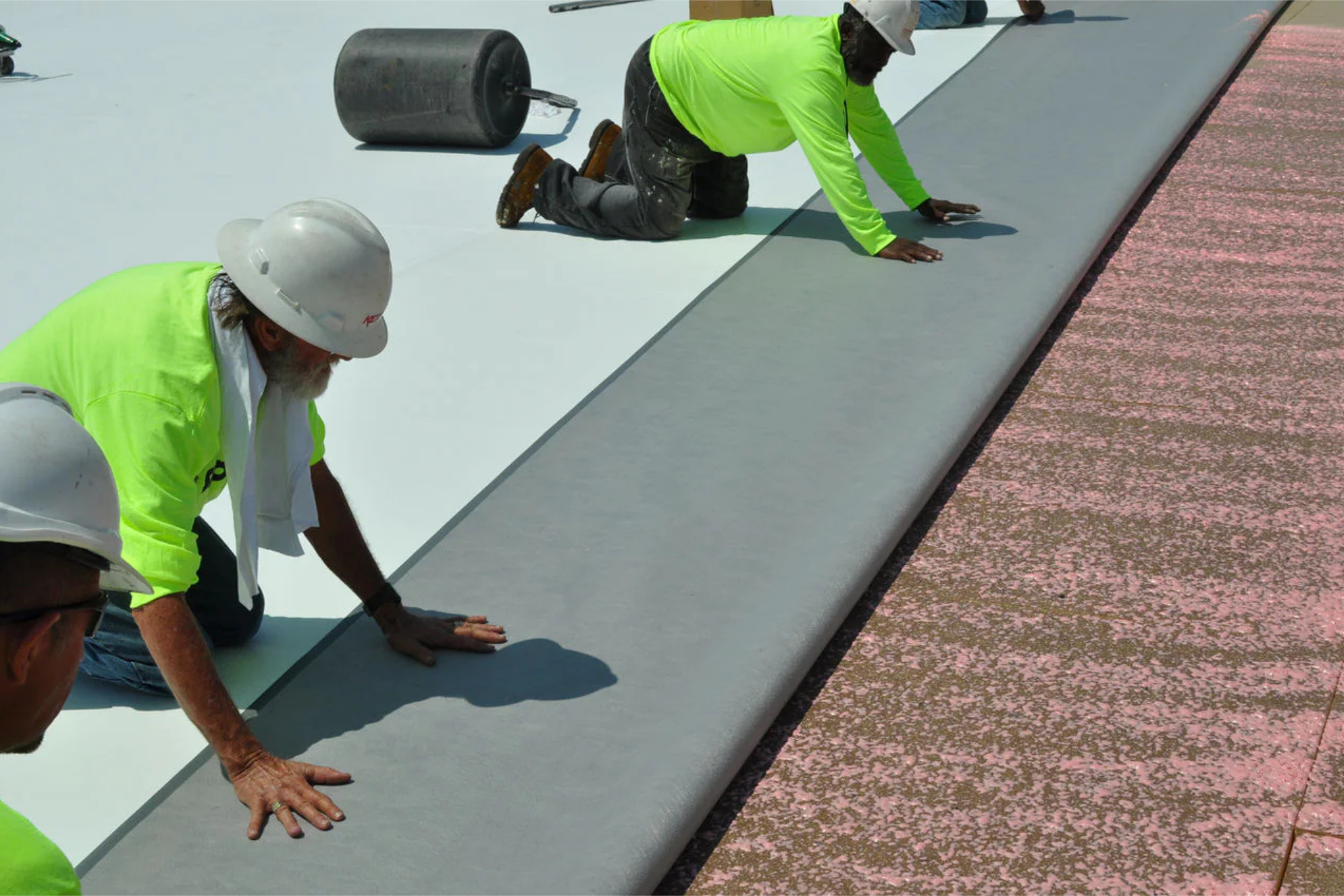
Half the things you've heard about flat roofs are wrong. They don't all leak. They don't all fail at 10 years. They aren't just for warehouses. A properly installed flat roof on a Branson office, restaurant, retail strip, hotel, medical building, or modern home should last 20 to 40 years depending on the system. The trick is matching the right flat roofing system to the right building and getting the install done correctly. Flat roofing in Branson handled by people who know low-slope systems specifically. Here's what's real, what's marketing, and how to tell the difference.



We Hear You
Flat Roofs Have a Reputation That Comes from Bad Installs.
The flat roof reputation problem starts with a real fact and ends with a wrong conclusion. The real fact is that flat roofs are unforgiving systems. A single failed seam, a poorly flashed penetration, an undersized drain, or a wrong-spec membrane choice can mean leaks within months. The wrong conclusion is that flat roofs themselves are bad. They're not. The contractors who install them without proper training, the architects who specify the wrong system for the building, and the building owners who skip maintenance are usually where flat roof failures actually start. The systems themselves, when installed correctly and maintained on schedule, work as well or better than steep-slope alternatives for the buildings they're designed for.
The other thing that gives flat roofing its bad name is the gap between what looks like the same job on a proposal and what's actually different on the install. A TPO single-ply membrane install can be done with sloppy seam welding, cheap insulation underneath, undersized drains, and inadequate flashing at penetrations. The proposal still says "TPO single-ply membrane." The completed roof still looks white from the parking lot. But the warranty registration paperwork is missing, the seams will fail within 8 years instead of lasting 25, and the manufacturer warranty becomes unenforceable because the install didn't meet their specifications. The building owner finds out years later when the leaks start and the contractor who installed it isn't answering calls.
That's the actual flat roofing in Branson story. The systems work. The installs are where buildings get burned. A real flat roof contractor uses the right material for the building, follows the manufacturer install specs, photographs every layer of the install, files the warranty registration paperwork correctly, and stays available when something needs attention years later. Anything less is a low bid that's going to cost more in the long run.
Our Roots
A Message From Tyler Arnold
I'll tell you the most important thing about flat roofing right at the start. No single flat roof system is universally "best." TPO, EPDM, modified bitumen, and coating restoration all have buildings they're right for and buildings they're wrong for. A contractor who pushes the same system regardless of your building's specifics is either undertrained or oversimplifying. The right system for a 30,000 square foot retail box with significant air conditioning load is different than the right system for a 4,000 square foot restaurant with multiple HVAC penetrations. The right system for new construction is sometimes different than the right system for replacement over an existing substrate.
Here's how Big Chief handles flat roofing decisions. We install TPO and EPDM single-ply membranes, modified bitumen (torch-down and self-adhered), and coating restoration systems depending on what fits your building. We walk through the actual specifics of your building at the site visit: climate exposure, HVAC load, drainage configuration, substrate condition, ownership timeline, and budget. Then we recommend the system that matches your situation, not the system we have the most of in stock or the easiest to install. Our crews are trained on every system we install, not just the most common one. We document every layer of the install with photos. We file the manufacturer warranty registration paperwork correctly and provide copies to you on completion. And we back the workmanship with a written warranty separate from the manufacturer coverage.
The other thing I'll tell you straight is that flat roofing maintenance matters more than steep-slope maintenance. A flat roof catches everything that falls (leaves, debris, branches, snow), which means drains and scuppers need clearing regularly, seams need checking annually, and small issues need addressing before they grow into big ones. Most flat roof failures we see could have been prevented by maintenance work that costs a few hundred dollars but didn't happen. We offer maintenance programs for the buildings we install and the ones we don't. If you're looking at flat roofing in Branson, call us. The first conversation is a site walk and an honest assessment.
Our Commercial Roofing Services
Commercial Roofing Services We Offer
Flat roofing is one part of what we do for commercial buildings across Branson, Hollister, Forsyth, Ozark, Springfield, and the surrounding service area. Here's the full lineup of commercial roofing services. Tap any card to learn more.
Commercial Roofing Installers
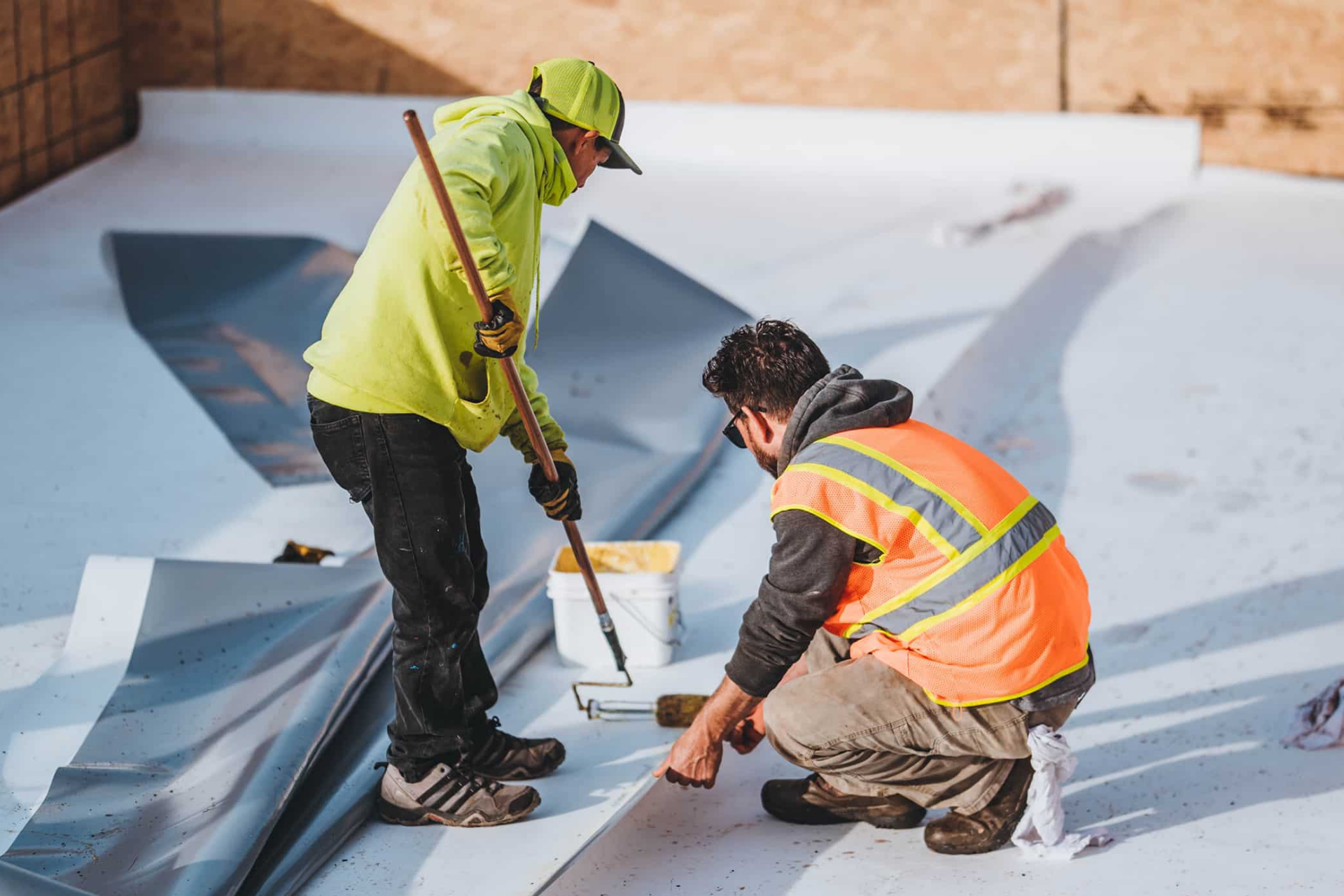
Commercial roofing installers in Branson should understand low-slope systems, single-ply membranes, modified bitumen, roof coatings, and the practical realities of installing without shutting down your business. We do.
Commercial Roof Repair
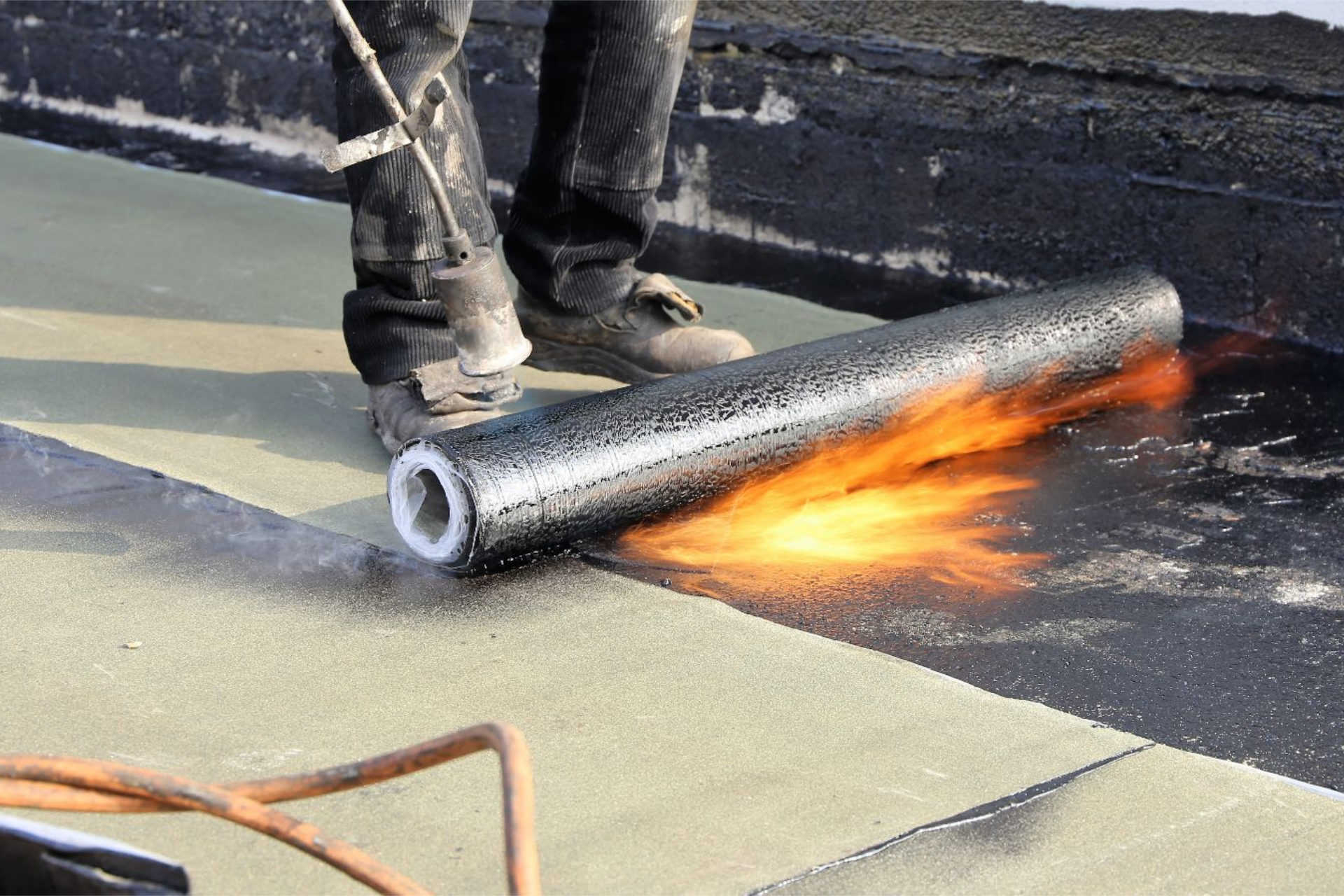
Targeted repair work on commercial roof systems. Leak source diagnostics, flashing repair, membrane patching, drain and scupper service. Photo-documented work that fixes what's broken without selling you a system you don't need.
Commercial Roof Replacement
Full commercial roof replacement when the existing system has reached end of life. TPO, EPDM, modified bitumen, or coating restoration options, scheduled around your business operations with photo documentation and real warranties.
Flat Roofing
Low-slope and flat roof systems built for commercial buildings. Single-ply membranes, modified bitumen, and coating systems matched to your specific building, climate exposure, and use case.
Flat Roof Repair
Targeted flat roof repair work. Membrane patching, seam re-welding, flashing repair, drain service. Diagnostic-first approach that finds the actual leak source instead of guessing.
Flat Roofing Replacement
Full flat roof replacement when restoration won't hold or the existing system is past its serviceable life. Honest evaluation of whether replacement or restoration delivers better value for your building.
Commercial Roofing Installers
Commercial roofing installers in Branson should understand low-slope systems, single-ply membranes, modified bitumen, roof coatings, and the practical realities of installing without shutting down your business. We do.
Commercial Roof Repair
Targeted repair work on commercial roof systems. Leak source diagnostics, flashing repair, membrane patching, drain and scupper service. Photo-documented work that fixes what's broken without selling you a system you don't need.
Testimonials
What Other Branson Businesses Are Saying
Questions Branson Building Owners Ask About Flat Roofing
Is a flat roof actually flat?
No. "Flat" is a misleading term that the industry uses for low-slope roofing. A properly installed flat roof has a minimum pitch of about 1/4 inch per foot, which is shallow enough that it looks flat from the ground but steep enough to direct water toward drains. Truly flat (zero slope) roofs hold ponding water, which destroys membrane systems. The industry term most commonly used is "low-slope roofing." Same systems, more accurate name.
Do flat roofs leak more than pitched roofs?
Not when installed correctly. A properly installed flat roof on a commercial building should last 20 to 40 years depending on system, with leaks rare. The flat roof reputation for leaking comes from poor install practices, deferred maintenance, and contractors using the wrong system for the building. Pitched roofs hide install problems for longer because gravity helps shed water even when seams or flashing aren't perfect. Flat roofs expose install problems immediately, which makes the install quality matter more, not less.
How much does flat roofing in Branson cost installed?
Pricing varies by system, building size, complexity, and substrate condition. As rough benchmarks: TPO and EPDM single-ply membranes run $6 to $14 per square foot installed, modified bitumen runs $7 to $15 per square foot, and roof coating restoration on existing systems runs $3 to $8 per square foot. A 10,000 square foot building can run anywhere from $30,000 to $150,000 depending on the system chosen and prep work required. We provide line-item bids so you can see exactly what's included.
What flat roofing systems do you install?
TPO single-ply membrane (thermoplastic polyolefin), EPDM single-ply membrane (rubber), modified bitumen (asphalt-based, torch-down or self-adhered), and roof coating systems (silicone, acrylic, and polyurethane). The right system depends on your building, climate exposure, budget, and ownership timeline. We bring product samples and specification sheets to the site walk so you can compare options against your specific situation.
What's the difference between TPO, EPDM, and modified bitumen?
TPO is a white reflective thermoplastic membrane with heat-welded seams. Good for buildings with significant air conditioning load (the reflective surface lowers cooling costs), typical service life 20 to 30 years. EPDM is a black rubber membrane with mechanically attached or fully adhered installation. Strong track record on commercial buildings, typical service life 25 to 40 years. Modified bitumen is an asphalt-based system applied in multiple plies, torch-down or self-adhered. Tough against foot traffic, typical service life 20 to 30 years. Each system has buildings it's right for. We walk through the trade-offs at the site visit.
How long do flat roofs actually last?
TPO typically lasts 20 to 30 years. EPDM typically lasts 25 to 40 years. Modified bitumen typically lasts 20 to 30 years. Coating restoration extends the life of an existing roof by 10 to 20 years and can be reapplied. Actual service life depends heavily on install quality, maintenance, climate exposure, and building use. A poorly installed flat roof can fail at 8 years. A well-installed, well-maintained one can hit the upper end of its range. Install quality matters more than the system brand or material.
Can flat roofs be walked on?
Yes, but carefully and with limits. Single-ply membranes can be walked for inspection, maintenance, and HVAC servicing without damage when proper footwear is used and the membrane is in good condition. High-traffic areas around HVAC equipment, hatches, and access points should have walkway pads installed to protect the membrane. What you don't want is heavy foot traffic in random places on the roof, especially with sharp objects (tools, hardware, debris) that can puncture the membrane. We install walkway pads on critical paths during install and maintenance work.
How do I know if my flat roof needs replacement vs repair vs coating?
Three signals tell you what your roof needs. Replacement makes sense when the membrane is failing across the roof systemically, the substrate is widely saturated, drainage problems are widespread, or the roof is at or past its useful life. Repair makes sense when the failure is localized (specific seams, specific penetrations, isolated damage) and the rest of the roof is in good shape. Coating restoration makes sense when the roof is aging but still structurally sound, leaks are minor or absent, and you want to defer replacement by 10 to 20 years at a fraction of the cost. We assess your specific roof and tell you straight which path delivers better value.
Does my flat roof need a drain or just a slope?
Both, in most cases. Even a properly sloped flat roof needs interior drains or perimeter scuppers to direct water off the roof at multiple points. Single-drain configurations are vulnerable to clogging (one drain blockage means standing water across the whole roof). Multi-drain configurations are more resilient. Scuppers (overflow drains through the parapet wall) act as failsafes if interior drains clog. Drainage design is one of the most underappreciated factors in flat roof longevity. Bad drainage destroys a perfectly installed membrane.
How do I find a flat roofing contractor I can actually trust?
Save yourself a headache. Ask these five questions before signing with any flat roofing contractor:
- What system are you recommending and why is it the right call for this specific building?
- Are you trained on the specific system you're installing, and can you verify manufacturer certification?
- Will the install crew be your employees or subcontracted?
- Will I get photo documentation of every install layer and warranty registration paperwork?
- What does your workmanship warranty cover, and for how long, in writing?
If a contractor stumbles on any of those, that's your answer. As your flat roofing in Branson team, we answer all five before you've even agreed to a site walk. And we don't sell the same system to every building regardless of fit, which is one of the most common patterns in this industry.